Tuesday, 29 December 2009

Logo


We went through all the possible names that we could use. We found names such as tass productions, etc. But we found that in the end, we decided on the name Avatar Animation. Sultana was then supposed to make the logo, however, she was unable to complete the task and I just made one for the time being.

Confirmation With Actors

I went to confirm with Mr Davey that we were still going to film on the designated day. However, when i asked him, he said that he had forgotton about it and had organised to do something else on that day. So we rearanged the date to another day.

Thursday, 17 December 2009

Location Lookout

We looked for places were we could film our scenes. We took images and filmed a couple of shots. For example, we found a wooden fence in school which could work with our scence with the fence. We had a look around other places but could not find one so we decided to use that one. Me and taslima even filmed how we would shoot it. for instance, taslima would act out our actors role and i would film it and find the best angles for that scene.

Creating the Character


As i had picked up the skills for animting quite quickly. I got the special job of creating the main character. I had no idea where to start but after a while i found a photo of mr davey which i used as a template. I drew over his face on another layer and made certain changes such as eyes, size of nose, size of head, etc. After a lot of work, i managed to create this character below.

Wednesday, 16 December 2009

Background


Our main focud here was the background. We had to create a city background. After we created it, did panning on an object aswell. I created a little scene with a person running. I call it, "pac man on the run".

Tuesday, 15 December 2009

Panning and Background


Here we tried to do both creating a background and the panning technique. We drew our fields in layers, insuring that the further away the hill was, the lighter the colour was to show distance. We also made the background long so they we could do the panning shot. In order to pan, we made the ball bounce up and down on the same spot on one layer and we moved the background from one side to another in another layer. This created the effect of panning.

Monday, 14 December 2009

Frame By Frame

Frame by frame is taking a picture of an object or a person and then moving the object/person and taking another picture. you keep doing this until you get a series of images that when you play one after another, it will look like the object or personm is moving. This is slightly different in flash because in flash, you can create the animation characters or objects.

I did a short frame by frame animation as an experiment. I made it look like i was typewriting.

Layering


Here we learnt how to make two things do two complete different things at the same time. For example, i have a man on one layer and another object on another layer. Both can move on each layer and both show up on the screen. The good thing about layering is that you wont get mixed up in each object. You just label the layer and you will know exactly what layer you are working on.

Friday, 4 December 2009

Finding Actors and Signing Agreement

We had to choose who would be our actors in the film. We had a discussion about who would be best for the roles. At the end of it we, we decided to have a teacher (mr davey) to play the lead role. We thought that he looked the way we wanted the character to look like. We also knew he was an actor because he would be more willing and so it would be easier to film with someone with experience.

We thought the librarian would make the right type of mother we wanted in our character look like. Our decision was made totally on appearance. We had no idea whether or not she would be willing or coud act the way we wanted her to.

The aliens, were not a significant role as they were extras, so we decided we would just get any two men and one woman who was available.

We then asked each person if they could play the part and they all agreed. After we found all our characters, taslima then produced a contract which all actors would have to sign. We gave them a copy and kept a copy for ourselves.

Friday, 27 November 2009

Shape tweening


We use the shape tweening, you can create a similar effect o morphing. Its makes the shape appear to change into another shape. Flash can also tween the location, size, and color of shapes.

Monday, 23 November 2009

Audience Profile

Our Audience is of the following:
  • children aged 7 and above
  • working class
  • Have an interest in fantasy and adventure
  • have a wild imagination
  • People who enjoy comedy
  • Adults who like to get in touch with their 'inner child'.
  • Would have enjoyed films such as Monsteres Inc and Monster house.

Friday, 20 November 2009

Motion Tweening

Trevor is going to teach us certain techniques for our animation. So we needed to start with the basics.

Motion tween is nothing but tweening a Symbol's movement from one position to another.
In this, i created a shape and converted it into a symbol. I then made a keyframe and moved the symbol. After doing this a number of times. You can watch the symbol move from one position to another. I managed to animate my shape.

Thursday, 19 November 2009

Animatic

This is the unfinished animatic. Sultana went through all the sounds and found the ones that go with the story. For example, when the character (Nathan) gets caught, you hear him say, ‘Oh, no’. It may not be possible to use all of these sounds but will definitely use some, like the ‘Evil Laugh’. This animatic gave us an idea of how the story would go with certain sounds. We will finish this off by adding the rest of the music or sounds.

http://www.youtube.com/user/VRYRANDOM

Sunday, 15 November 2009

Questionnaire - Audience Research

Please fill out this questionnaire as it will help media students decide how to do their short film. Please answer as honestly as you can. 1. Age: 10-15( ) 16-20( ) 21-25( )

2. Do you watch animations? Yes ( ) No ( ) Why?
………………………………………………………………………………………………………………………………………

3 . Which of the following narrative structures or styles do you prefer in a comic animation film?(please tick two):
a) Straight guy vs. full-comic guy (one natural & sensible/ the other comic & often stupid)( )
b) Equilibrium- disequilibrium- equilibrium (All’s well-a problem develops- problem fixed)( )
c) Predictable( )
d) Unpredictable / twists( )
e) Slap-stick humour (boisterous action, as the throwing of pies in actors' faces, mugging, physically bumping into each other/falling over, etc.)( )
f) Satires (Comedy that mocks the ills and vices of society, a group or a person)( )

4. What qualities do you look for in a main comic animated character? (Tick one)
Good looks( ) Funny( ) Controversial( ) Smart( ) Strong( ) Other( )If other, please specify:……………………………………………………………………………………………..............................................

5. What features do you look for in a short animated film? (Tick two)
Flash Backs ( ) CGI ( ) Action ( ) Colour ( ) Cliff hanger ( )
Graphics ( ) Other ( ) If Other, please Specify:...................................................................................................................................

6. Name three films that you enjoyed watching that is an animated comedy?………………………………………………………………………………………………………………………………...........
...................................................................................................................................................
...................................................................................................................................................

7. Look at the list of institutions below. Which one in your opinion, produces animation more to your preferred taste?
a) Pixar ( )
b) Disney ( )

8) How do you think the animations produced by this institution represents young people of your age?
……………………………………………………………………………………………………………………………………....

9) Are you happy with this representation? Explain reasons for your answer.
………………………………………………………………………………………………………………………………………
……………………………………………………………………………………………………………………………………....

10) Would you like your character to be of your (tick one):
Ethnicity ( ) Please specify your ethnicity.......................................................
Age ( ) Please specify your age.................................................................
Social class ( ) Please specify your social class.....................................................

We put this questionnaire up on suvery monkey- http://www.surveymonkey.com/s/RM8NLBN

Sunday, 8 November 2009

A change of story

Mr Williams gave us another option, in terms of our film. He suggested that we could do animation. So after researching about it, we decided not to only change the nature of the film, but also the storyline. We all had our own opinions on this change. Some people had different views on how the short film should be. Here, short clip of us planning the story.

In case, this video does not work, please use the link below.
(http://www.youtube.com/user/VRYRANDOM)

Wednesday, 28 October 2009

Animation Research

Animation is a series of still drawings that, when viewed at a fast paced, gives the impression of movement. The word animation originates from the Latin word ‘animare’ which means, ‘to bring life into’. Nowadays, most animation is done on computers and on certain software, such as, ‘Adobe Flash’. Some can be very complex , for example, AVATAR, and some can be very simple, for example, this animation on a stick man which can be found on youtube. (http://www.youtube.com/watch?v=3f1eCOuwAkQ)

Types of animation

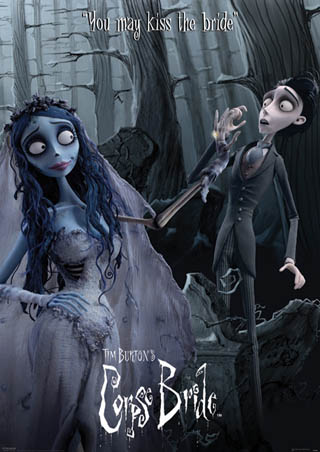
Stop-motion animation is the process of photographing a person, moving it a little bit, and then photographing it again. You then put all the photographs together and all the small movements look like action. It is very easy to do but takes a lot of time. Such films like, the Corpse Bride by Tim Burton. Each character in this film has several versions of the body and heads, in order to make it look like they are moving and making facial expressions. The set is also made like this, creating a dark, beautiful world.


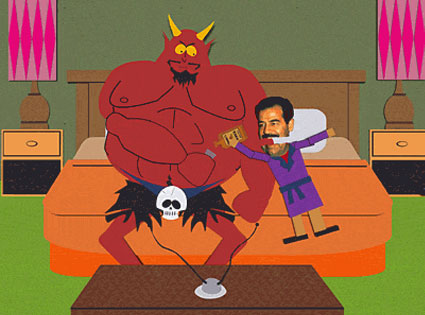
Cut-out and collage animation is a combination of cut-out and collage techniques. Collage animations are pieces cut out from photos, magazines, books or clipart. Collage animation is pieces of that have been cut from drawing paper, craft paper, or possibly drawn or painted on. The pieces are arranged loosely or connected by fasteners and then arranged. Each move is captured, repositioned and then captured again. South Park is known well to do this. All the characters are cut-out but sometimes they bring in characters such as Bin Laden or Sadam Hussain, where they use the collage technique.


Rotoscoping is used to capture realistic human movement by drawing over real footage and actors. Rotoscoping is used in such Actors are photographed doing the scenes, and then the photos are digitally processed with a graphic filter. When the photos are strung together, the story is told with limited animation and this means that there is little movement. Here is an example which i found on youtube- (http://www.youtube.com/watch?v=AlA51bIuvi4)


A cel is a sheet of transparent cellulose acetate used as a medium for painting animation frames. It is transparent so that it can be laid over other cels and/or a painted background, then photographed. (Source: The Complete Animation Course by Chris Patmore.) When you think of cartoons, the first image that pops into your head is cel animation, for example, ‘The Simpsons’.


CGI (Computer Generated Imagery) is also used for 2D and stop-motion animation. But nowadays, 3D CGI is becoming more poplular. It does not only have to be used for an entire film but could be used for special effects. When filmmakers used models or stop-motion in the past, they now can use 3D CGI animation, such as in the first three Star Wars films and Spider-man movies.


Source:(http://www.vectormagazine.co.uk/cgi-bin/upload/spiderman_3.jpg)

Thursday, 15 October 2009

Coming Up With A Story

We changed our minds a lot of the times as all of us have very different opinions. In the end, we came up with two options; a comedy and a horror. The comedy story was about a man who goes out on several dates at one time, for example, he is on date with a woman in a restaurant. He excuses himself to the toilet and goes to the restaurant next door and continues his date with another woman, and so on. He then goes home and you see he has a wife. She wants to have quality time with the husband but he says that he is too tired. The other story is about a man who comes home and sees his wife on the floor, beaten up and bleeding. He doesn’t understand why she is scared of him and doesn’t let him touch her. He then hears something and turns around and gets hit in the head by himself. This sounds confusing, but the reason it seems as though he is hitting himself, it that he is schizophrenic. He did this to his wife but thinks that someone else did it and he is completely innocent.

Saturday, 10 October 2009

Analysing a short film

Replay (Animated Short film)-ANIBOOM
(8:45min)

It starts off with a low level angle of someone running and you can just see their shoes. This creates a sense of urgency and danger. The audience instantly know that there is something wrong and that he or she could be running from something. You first think that this is a man because of the clothing looks stereotypically what a man would wear. When she runs in and then shuts the door there is a red and green light. This is a semiotic symbol because most people recognise the green light as good and the red light as bad, so when the red changes to green, the audience knows it is now safe. It then zooms in at the bag and you know that the bag or something in the bag is significant to the main story.
She then comes into a room. A low lighting is used to show that this is not a happy place and they could possibly be somewhere where it is dark such as underground. They are not rich as the walls are made of metal and it does not look like they own many things. This is confirmed when she says that she has to sell the things that she found. It then shows a close up of his face and looking at the voice recorder and there is red lighting. This implies that he wants the voice recorder and is possibly thinking of taking it.
After he runs away, there is an establishing shot. This shows the outside of where they live and it looks like they are in a desert. This then shows why they live the way they do. As the boy is walking through the streets, you then realise that they are not living in the desert but in a place (town) that has been deserted. The gas mask implies that the reason for this is because of some gas or something that is in the air. Soft, classical music is played. This non-diegetic sound is used because it is trying to show that he is happy and amazed about what he is seeing. It also shows that he is in his world and not taking into reality about the state of the town because this is the first time he has ever seen it.
While this is going on, there are other sounds that are used such as breathing. The breathing is a significant part in the film as the whole reason why they have to live underground is because the air is toxicated. A match cut is used when the boy hears the sound off the church bells ringing. He first hears the sound on the tape recorder and then he sees the church at the same time.
The children that he sees are of a lighter colour than the surrounding area. This shows that they may not be real and are possibly a creation from his imagination. There is a fade out to white and fade in after he goes to play with the children he is imagining. This shows the audience that it is no longer his imagination but reality. That is why you know that when you see him on the floor, he did not really play with the children but could have possibly died or was unconscious after he took the mask off. Before he took the mask off, his face was in the dark (shade) and when he took the mask off; his face was in the light. This could be trying to represent the fact that he now feels free.
They show a close up of the voice recorder, the object that started this problem. At first it was still playing the children talking but then it broke and stopped playing. You then knew that the animation/story had ended.

(http://www.youtube.com/watch?v=g-cFHeoXAw8 ) -LINK

Wednesday, 30 September 2009

The Brief

Our brief was to produce a film for a younger audience. We had a look at different themes that we could use. The main themes that were mentioned was drama/horror and comedy. From there we thought of stories that we could do, such as, a comedy about a guy who goes out with several girls at the same time. He runs from restaurant to restaurant. At the end of it, he goes home and you realise he has a wife. She wants him but he is too tired to. This story was more comedic with the script rather than the actual story.

Thursday, 24 September 2009

French New Wave

We all had to do powerpoints on a certain film style. Mine was about the French New Wave.

Sunday, 20 September 2009

History Of Film

History of Film
We learnt about the History of film, different styles and techniques. It first originated from cave paintings and shadow plays from china in the eleventh century.
The daguerreotype process was the first method of getting permanent images with a camera. The man who gave his name to the process was called Louis Jacques Mande Daguerre, a French artist and scenic painter. In England, at the same time as Daguerre ,Henry Fox Talbot created his own photographic process known as the Talbotype.It wasn't until a Dutch Physisist named Plateau around the 1870's, suggested combining the photographic images with the Zoetrope, or Phenakistiscope that real images, rather than paintings, could be used. In order to create movement, photgraphers had to positon and repositon a model.
Some of the vocabulary used in this lesson wa
s:
· Deep focus

· Shadow focus
· Matte
· Metonymy
· Synecdoche


(Source:http://courses.ncssm.edu/gallery/collections/toys/images/ZoetropeTopView0315.jpg)